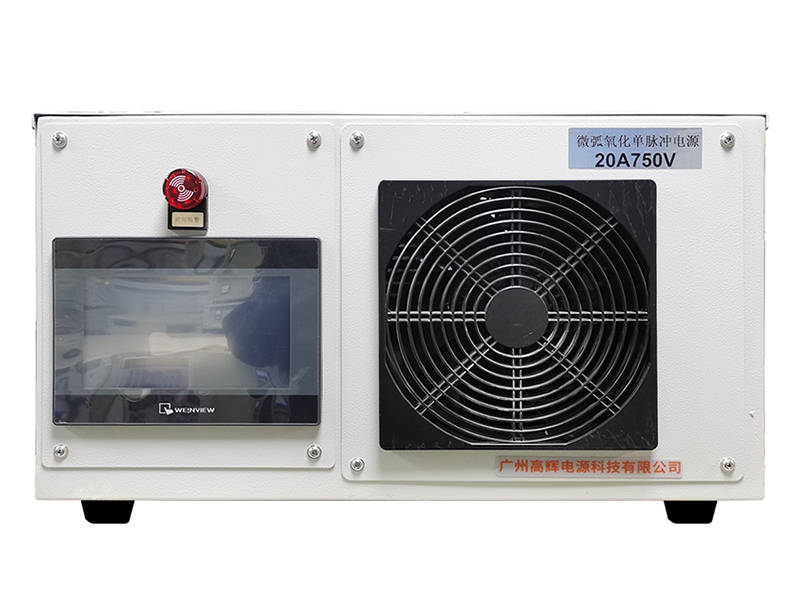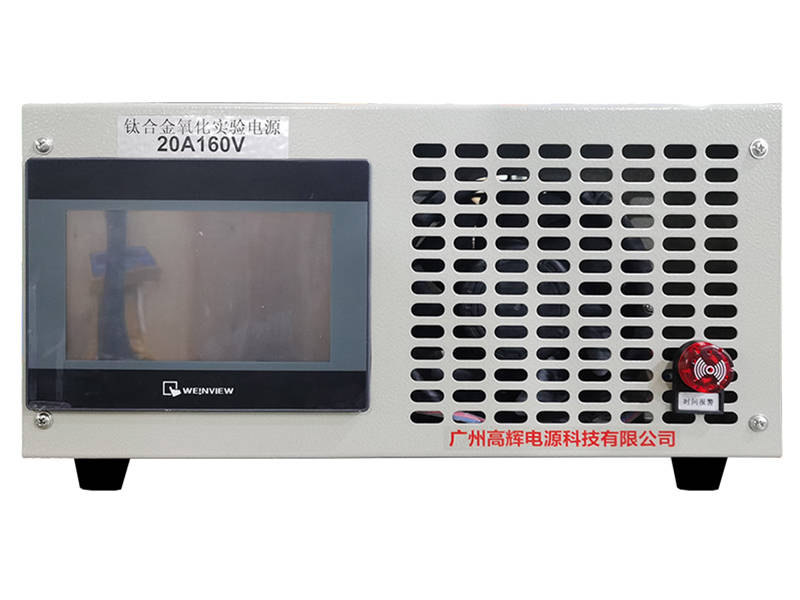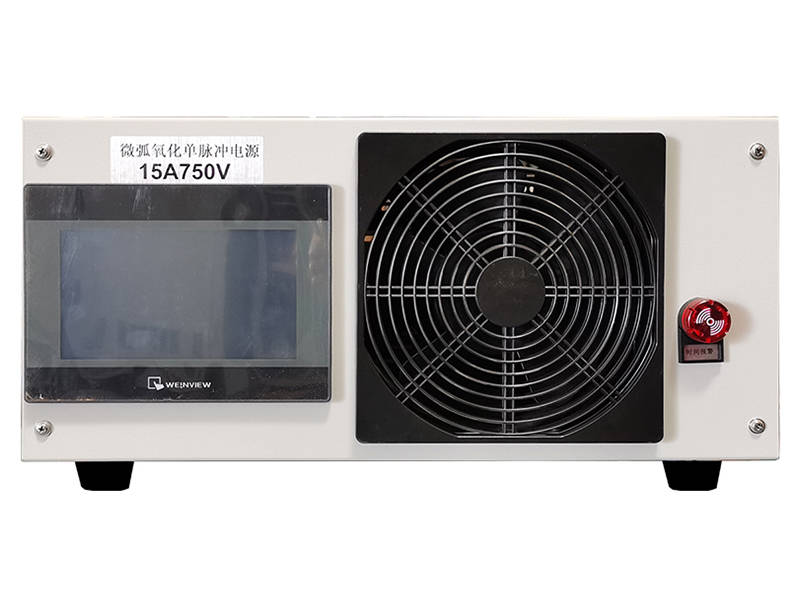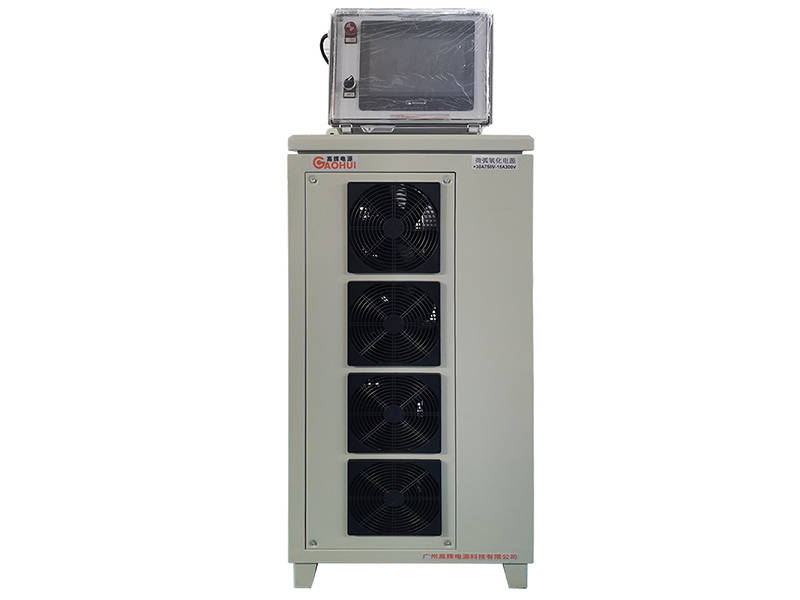
Output: 30A 750V / 15A 300V Dual Range
Mode: Dual-Pulse Operation
Cooling: Air cooled
Control: Touchscreen HMI with recipe storage
Accuracy: ≤ ±1%
Applications: MAO research, PEO coating development
Materials: Aluminum, magnesium, titanium alloys
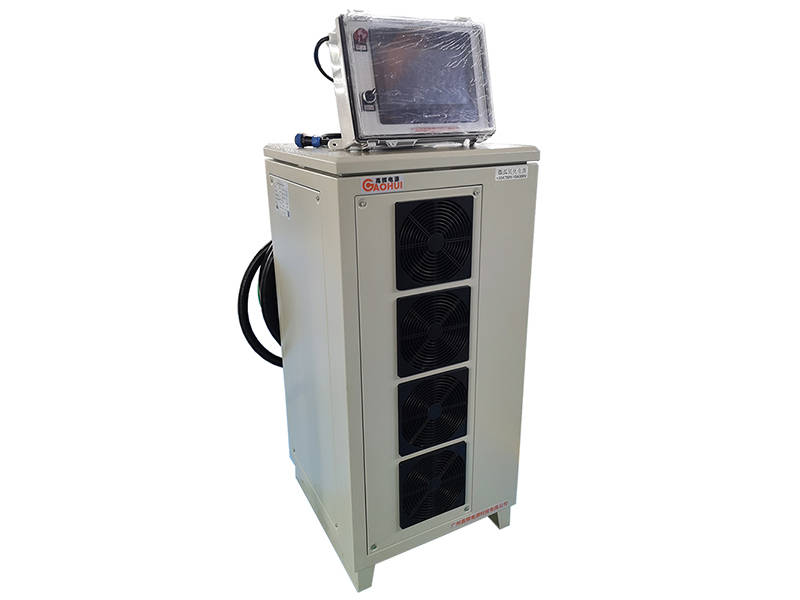
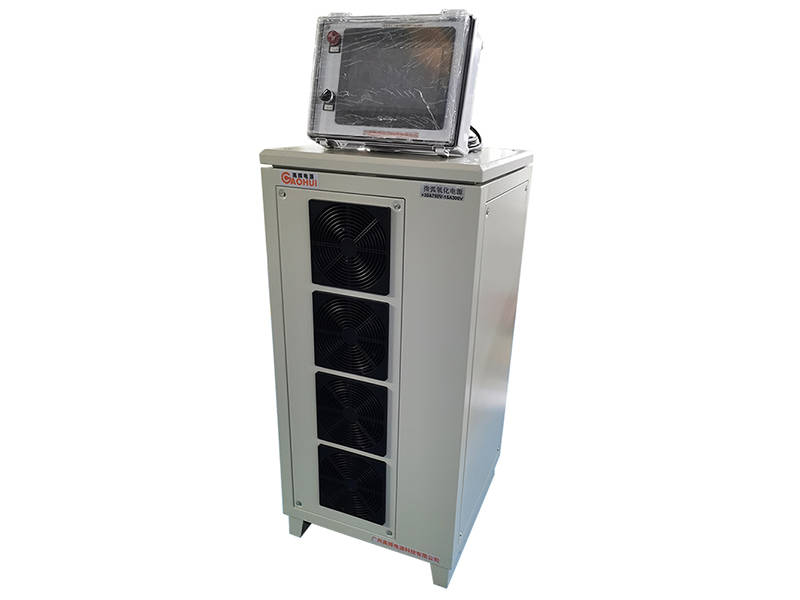
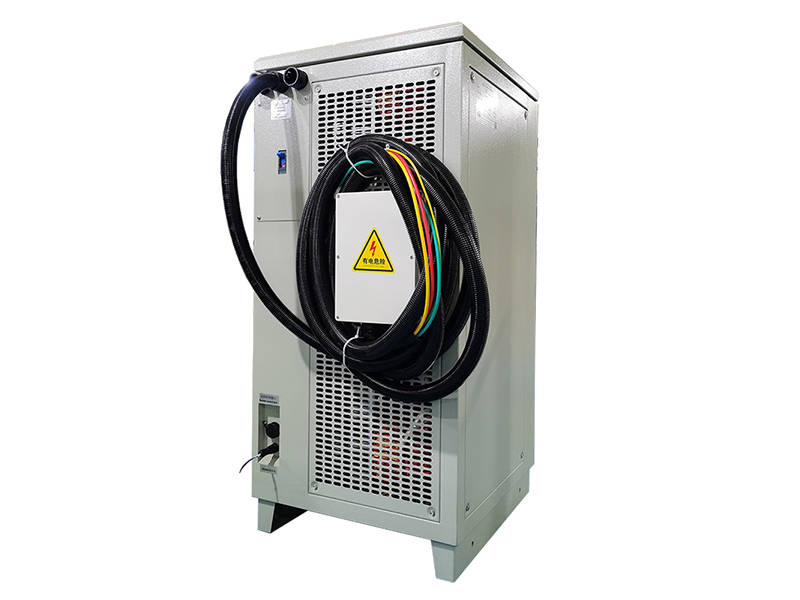
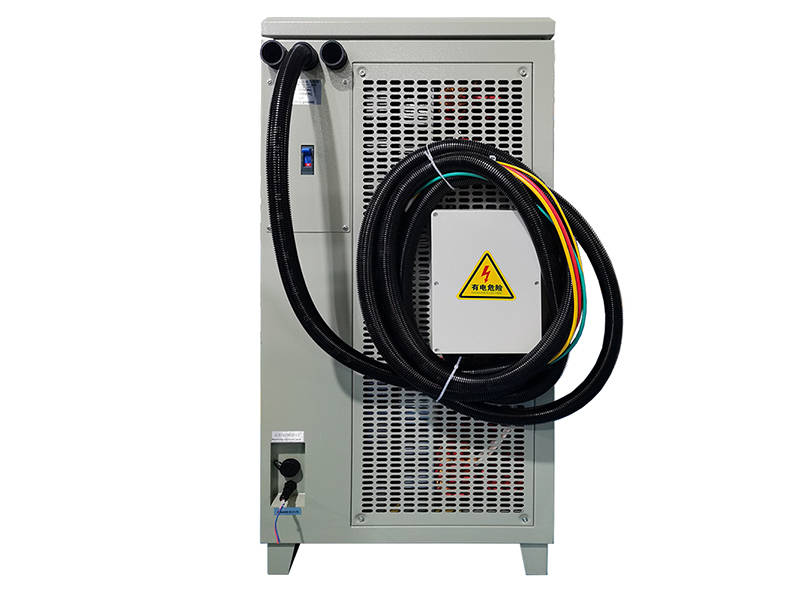
The MAO Dual-Pulse Rectifier delivers professional dual-output performance for micro-arc oxidation and PEO ceramic coating research. Notably, it offers two flexible ranges of 30A 750V and 15A 300V to adapt to a wide range of material tests. Furthermore, its dual-pulse architecture keeps discharge stable and controllable throughout the oxidation process. As a result, it creates uniform, dense, and wear-resistant ceramic layers on aluminum, magnesium, and titanium alloys. In addition, it lets you adjust parameters precisely so you can optimize coating structure and surface performance efficiently.
| Parameter | Specification |
|---|---|
| Input Power | 380VAC Three-Phase, 50/60Hz |
| Output Range 1 | 0–750V / 0–30A |
| Output Range 2 | 0–300V / 0–15A |
| Pulse Mode | Dual-Pulse Operation |
| Pulse Frequency | 10–2000 Hz Adjustable |
| Duty Cycle | 5–80% Adjustable |
| Rise Time | < 50 µs |
| Control Accuracy | ≤ ±1% |
| Control Interface | Touchscreen HMI with Recipe Storage |
| Cooling System | Forced Air Cooling |
| Protections | Arc Detection, OVP, OCP, OTP, Short Circuit |
| Single Pulse | ||||||
| No. | Model | Forward Current (A) | Forward Voltage (V) | Input Voltage (V) | Cooling Method | W×L×H (mm) |
| 1 | 5A750V | 5 | 750 | 220 | Air-cooled | 290×520×190 |
| 2 | 10A750V | 10 | 750 | 380 | Air-cooled | 510×560×230 |
| 3 | 20A750V | 20 | 750 | 380 | Air-cooled | 560×760×320 |
| 4 | 30A750V | 30 | 750 | 380 | Air-cooled | 560×760×320 |
| 5 | 50A750V | 50 | 750 | 380 | Air-cooled | 520×580×930 |
| 6 | 100A750V | 100 | 750 | 380 | Air-cooled | 580×650×1650 |
| 7 | 200A750V | 200 | 750 | 380 | Water-cooled | 850×1130×1630 |
| 8 | 300A750V | 300 | 750 | 380 | Water-cooled | 800×1270×1700 |
| 9 | 500A750V | 500 | 750 | 380 | Water-cooled | 800×1270×1900 |
| Dual Pulse | ||||||||
| No. | Model | Forward Current (A) | Forward Voltage (V) | Reverse Current (A) | Reverse Voltage (V) | Input Voltage (V) | Cooling Method | Dimensions (mm) |
| 1 | 10A750V | 10 | 750 | 3 | 300 | 380 | Air-cooled | 510×560×230 |
| 2 | 30A750V | 30 | 750 | 10 | 300 | 380 | Air-cooled | 560×760×320 |
| 3 | 50A750V | 50 | 750 | 15 | 300 | 380 | Air-cooled | 520×580×930 |
| 4 | 100A750V | 100 | 750 | 30 | 300 | 380 | Air-cooled | 580×650×1650 |
| 5 | 200A750V | 200 | 750 | 50 | 300 | 380 | Water-cooled | 850×1130×1630 |
| 6 | 300A750V | 300 | 750 | 100 | 300 | 380 | Water-cooled | 800×1270×1700 |
| 7 | 500A750V | 500 | 750 | 150 | 300 | 380 | Water-cooled | 800×1270×1900 |
Power(KW) = Output Voltage(V) × Output Current(A)
The product comes with a one-year warranty and boasts a service life of over 10 years. It supports both Constant Current and Constant Voltage modes, and it also includes a programmable ramp-up function for current or voltage settings. For time-sensitive applications, you can use the timed operation mode. Moreover, the multi-segment function allows you to vary constant current or voltage levels over time. The device further offers an RS485 communication interface, automatic polarity reversal, and a minute-level timing function. If you need customization, please contact us for further details.
Over all, GAOHUI provides complete single-pulse and dual-pulse models with air-cooled and water-cooled options. Accordingly, these units fit different production scales and process requirements.
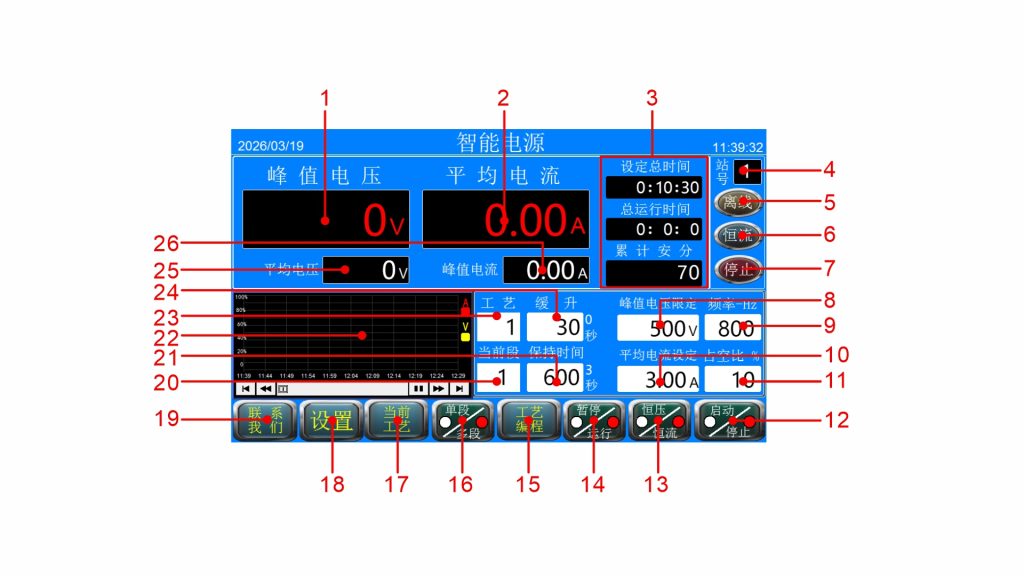
Shows the peak voltage of the current pulse, a key parameter affecting coating strength.
Displays the average current over the working cycle to monitor reaction stability.
Set total time: Total process duration.
Total running time: Elapsed working time.
Cumulative ampere-minutes: Total current-time value for coating thickness control.
Multi-station ID for managing different workpiece processes.
Indicates disconnection from remote/host system, local control mode.
Constant current mode, the most common for micro-arc oxidation.
Press to immediately terminate the oxidation process.
Process stage: Current running step in multi-step program.
Ramp-up time: Time for voltage/current to rise to set value, avoiding impact.
Peak voltage limit: Maximum pulse voltage to prevent breakdown.
Frequency (Hz): Pulse working frequency, affects coating density.
Current stage: Current process segment number.
Hold time: Duration of current segment.
Average current setting: Target average current value.
Pulse "on" time percentage in one cycle, affects heat input and coating structure.
Button to start or stop the process.
Toggle between CV and CC control modes.
Pause or resume the ongoing process.
Access multi-step program editor for complex recipes.
Choose between single segment or multi-segment process.
Shows currently loaded/running process recipe.
Opens system configuration menu.
Manufacturer/support contact information.
View historical voltage/current trend graphs.
Visualizes real-time/historical voltage/current curve.
Displays the peak current value of the pulse.
Displays the average voltage over the working cycle.
Shows system date and time.
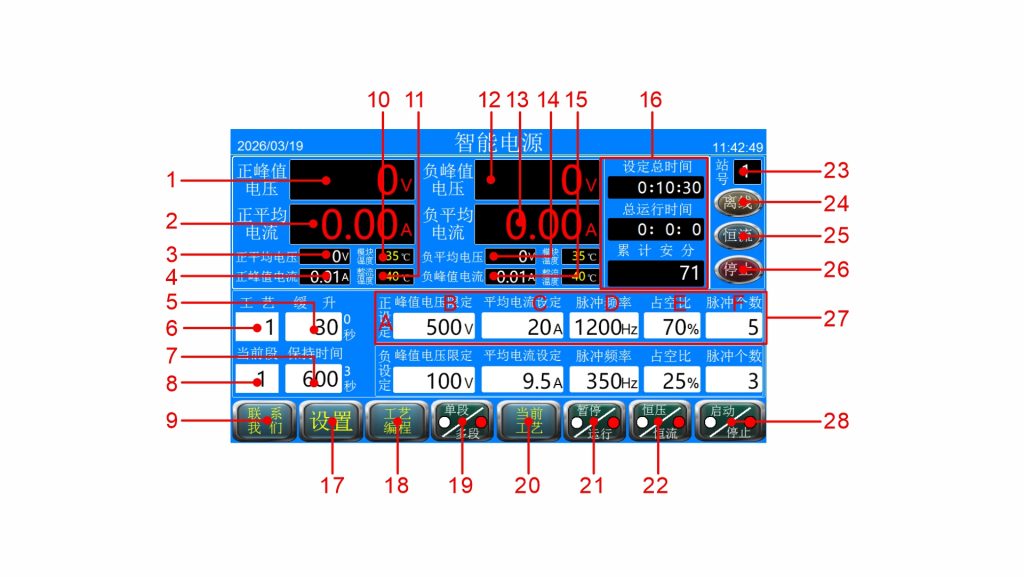
Shows the peak value of the positive pulse voltage.
Displays the average current of the positive pulse over the working cycle.
Shows the average voltage of the positive pulse over the working cycle.
Displays the peak value of the positive pulse current.
Shows the current running process number.
Sets the time for voltage/current to rise slowly from zero to the set value.
Shows the current running segment number in multi-stage processes.
Sets the duration for the current process segment.
Manufacturer/support contact information.
Shows the average voltage of the negative pulse over the working cycle.
Displays the peak value of the negative pulse current.
Shows the peak value of the negative pulse voltage.
Displays the average current of the negative pulse over the working cycle.
Sets the maximum allowed positive pulse voltage to prevent workpiece breakdown.
Sets the target average current value for the positive pulse.
Set total time: Total process duration.
Total running time: Elapsed working time.
Cumulative ampere-minutes: Total current-time value for coating thickness control.
Opens the system configuration menu.
Accesses the multi-step program editor to create complex recipes.
Selects between running a single segment or a multi-segment process.
Displays the currently loaded or running process recipe.
Temporarily pauses or resumes the ongoing process.
Toggles between constant voltage and constant current control modes.
Multi-station ID for managing different workpiece processes.
Indicates disconnection from the remote/host system, local control mode.
Current operating mode: constant current control.
Press to immediately terminate the oxidation process.
Positive: Pulse frequency, duty cycle, number of pulses.
Negative: Pulse frequency, duty cycle, number of pulses.
Main button to start or stop the entire process.
This unit runs two independent output ranges to support diverse experimental needs. Specifically, you can switch freely between high-power and low-power modes based on your material type. Consequently, you gain greater lab adaptability and faster research efficiency.
Dual-pulse output stabilizes arc reactions and reduces surface damage to your workpieces. Moreover, it boosts coating uniformity and strengthens adhesion on all lightweight alloys. Additionally, it cuts down defects to deliver consistently high-quality ceramic layers.
You can adjust frequency and duty cycle across a wide range to fine-tune energy output accurately. Specifically, you can optimize coating porosity, hardness, and thickness to match your application goals. Ultimately, this system produces systematic and reliable experimental results.
Forced air cooling lets the unit run continuously without extra water cooling systems. Accordingly, you simplify installation and reduce daily maintenance in any lab environment. Furthermore, it saves space and cuts operational costs for your research setup.
The rectifier holds control accuracy within ±1% even under dynamic loads to ensure repeatable tests. Besides, it includes built-in data recording and recipe storage to document every experiment fully. As such, you can compare and reproduce results with greater efficiency and consistency.
Primarily, this equipment develops high-performance coatings for aviation components. Additionally, it improves wear resistance and thermal stability in extreme working environments. Therefore, it plays a vital role in advancing aerospace material research.
In particular, you can use it to produce bioactive coatings for medical implants and dental devices. Importantly, it enhances biocompatibility and raises corrosion resistance effectively. As a result, you shorten the development cycle for new medical material solutions.
For automotive use, it optimizes surface coatings for aluminum and magnesium components. Likewise, it improves durability for engine and chassis parts significantly. Meanwhile, it supplies reliable data to support modern energy-efficient vehicle design.
In academic labs, it acts as an ideal platform to teach micro-arc oxidation and PEO principles. Furthermore, it supports graduate projects in material science and surface engineering. Thus, students gain professional hands-on experience quickly and effectively.
Dual output ranges allow one machine to run multiple coating experiments. As a result, you reduce equipment costs and improve lab resource usage. Besides, it matches different materials and process requirements perfectly.
Dual-pulse technology maintains consistent discharge and delivers high coating quality. Moreover, it reduces defects and performs reliably even on sensitive alloys. Therefore, it provides more credible and repeatable research data for your projects.
Its air-cooled design removes the need for complex water lines and extra equipment. In practice, you can install and operate it easily in any laboratory. Additionally, it runs safely and steadily for long working hours.
Recipe storage and data logging give you full traceability for every experiment. Accordingly, you raise research efficiency and improve formal documentation quality.
A: Products with the same nominal specifications often serve different industries, and they may carry different detailed parameter requirements. These differences directly affect production costs and technical solutions, so final prices will vary accordingly. For this reason, we recommend you contact us directly to receive a precise and tailored quotation.
A: We assign specialized consultants to support each industry sector. If you need further information, simply reach out to us. After we confirm your request, we will immediately send you the full technical datasheets and product images you need.
A: We focus on custom non-standard industrial power supplies, so we can fully adjust output current and voltage to match your exact needs. The products shown on our website only represent part of our actual range, as we do not list every model online. If you cannot find your desired specifications, please contact us directly. We will work with you to confirm your exact requirements, or we can guide you to select the most suitable parameters based on your industry standards. We will provide complete technical specifications and dimension drawings so you can fully understand the product.