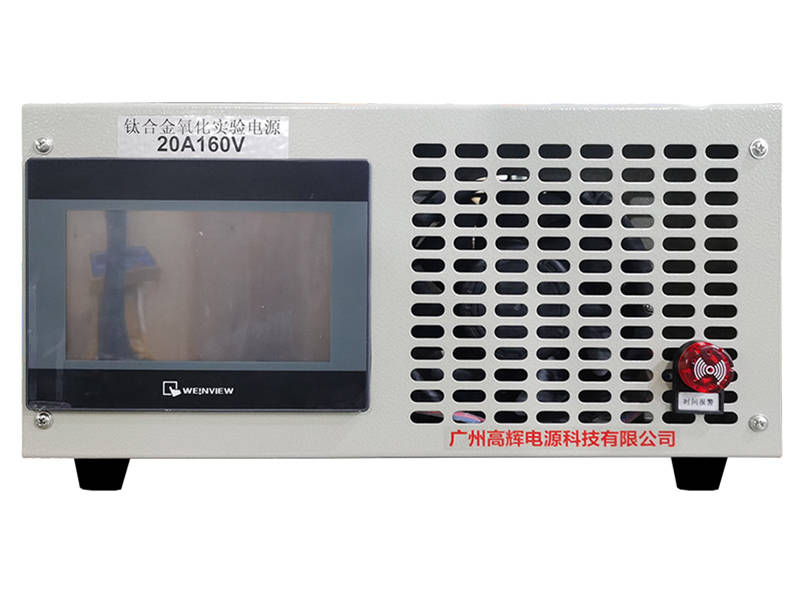
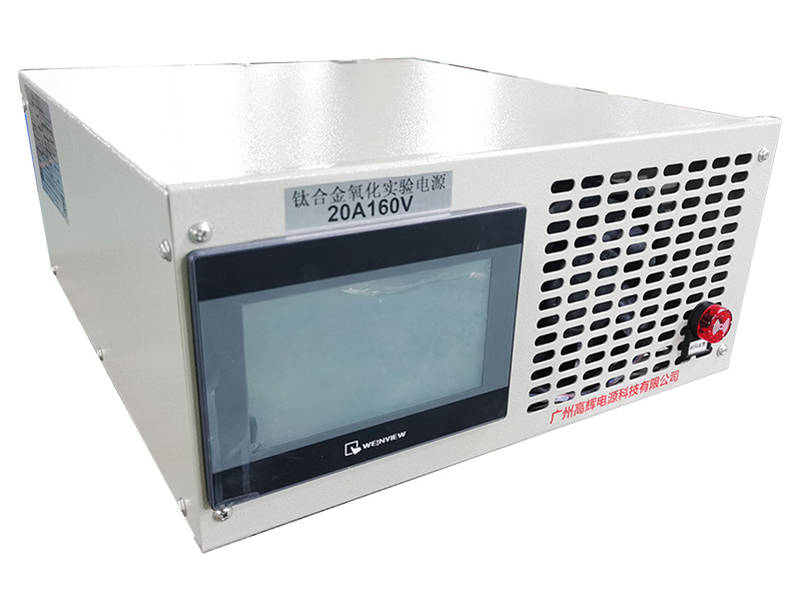
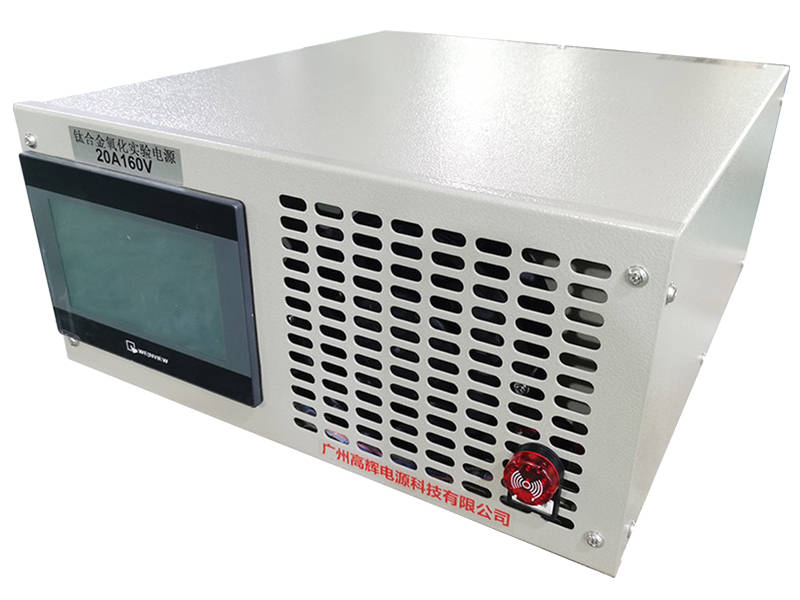
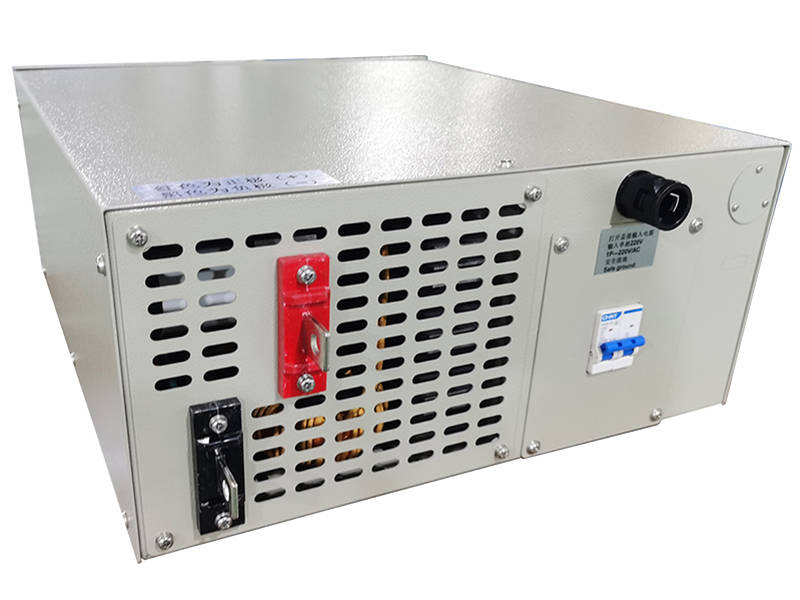
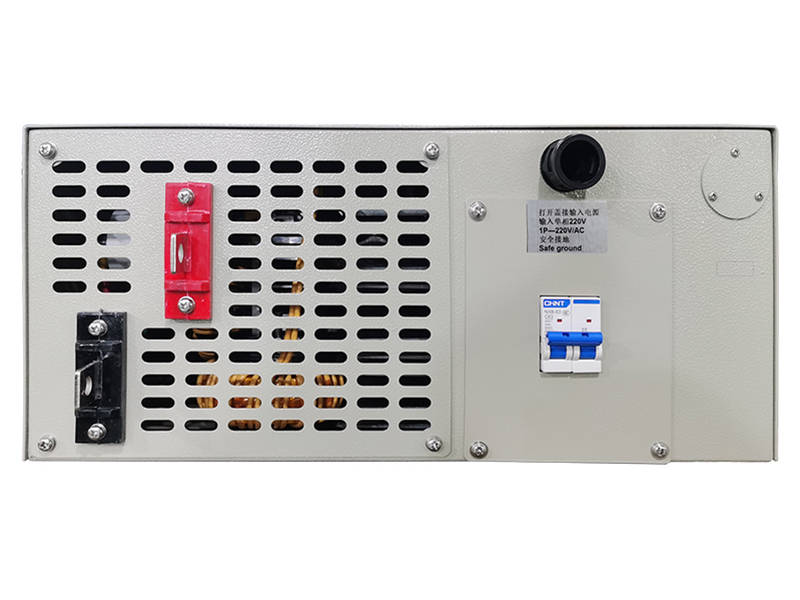
Tailored for material‑science laboratory testing, this 20A 160V titanium alloy oxidation experimental rectifier supplies consistent power output to build protective oxide layers on titanium alloy test coupons within bench‑top experimental environments.
20A 160V Titanium Alloy Oxidation Experimental Rectifier meets the specific power demands for titanium alloy oxidation lab trials, where stable output directly determines coating uniformity and repeatable experimental outcomes. In fact, generic lab power sources often lack suitable output characteristics for titanium oxidation reactions, and they may accumulate excessive heat during continuous testing cycles. Since titanium alloy oxidation generates thermal loads during electrochemical conversion, reliable heat dissipation becomes critical to hold steady operating temperature and avoid output deviation across multiple test batches.
Rated for 20A 160V working rating, this 20A 160V titanium alloy oxidation experimental rectifier adopts compact thermal architecture without extra water‑cooling accessories, which simplifies layout inside limited laboratory bench areas. Operators adjust current, voltage and related process parameters via local control panel to match varied titanium alloy grades and target oxide coating performance targets. After wiring completion and parameter configuration, research staff can run repeated oxidation experiments on small‑size titanium specimens. Meanwhile, multi‑level electronic protection reacts rapidly against over‑voltage, over‑current and short‑circuit hazards, and this protective setup safeguards test samples and internal circuit components throughout extended experimental runs.
This 20A 160V titanium alloy oxidation experimental rectifier uses high‑efficiency power switching hardware, and unit efficiency stays above 87% under regular experimental loads. Unlike water‑cooled rectifier models that need matched circulating water infrastructure, its streamlined structure reduces auxiliary equipment costs; therefore, research teams can launch oxidation tests without complicated site modification.
Fast‑response closed‑loop regulation stabilises output status as oxide films form on titanium specimen surfaces. Consequently, processed test parts show smaller coating thickness variance and fewer surface flaws, and researchers obtain highly comparable experimental data across different test groups. Moreover, onboard memory stores multiple sets of process parameter presets, and operators can recall validated parameter profiles instantly instead of manual setup for every new test batch.
Optimised for titanium alloy oxidation laboratory research scenarios, internal control circuits keep output fluctuation tightly restricted over the full adjustment range. Accordingly, it offers dependable driving energy to form even, corrosion‑resistant oxide coatings for various small‑format titanium alloy test pieces.
| Parameter Category | Specific Item | Specification |
|---|---|---|
| Output Rating | Rated Current | 20A |
| Output Rating | Rated Voltage | 160V |
| Control Mode | Operation Mode | Constant Current, Constant Voltage |
| Communication Interface | Data Port | RS485 |
| Protection Items | Safety Protection | Over‑voltage, Over‑current, Over‑temperature, Short‑circuit Protection |
| Applicable Samples | Suitable Materials | Titanium and Titanium‑Based Alloys |
The product comes with a one‑year warranty and boasts a service life of over 10 years. It supports both Constant Current and Constant Voltage modes, and it also includes a programmable ramp‑up function for current or voltage settings. For time‑sensitive applications, you can use the timed operation mode. Moreover, the multi‑segment function allows you to vary constant current or voltage levels over time. The device further offers an RS485 communication interface, automatic polarity reversal, and a minute‑level timing function. If you need customization, please contact us for further details.
This 20A 160V titanium alloy oxidation experimental rectifier applies to university material‑science labs, surface‑treatment R&D centres and new‑material process‑development projects. For instance, it carries out oxidation treatment for small titanium alloy coupons to evaluate oxide layer hardness, anti‑corrosion and surface property performance.
Additionally, it acts as dedicated experimental power hardware for investigating titanium electrochemical oxidation workflows. Apart from specimen treatment, it supports parameter screening and process feasibility validation, supplying valid experimental records for academic papers and new‑process specification establishment.
We specialise in manufacturing lab‑grade experimental rectifier hardware for titanium alloy surface‑treatment research scenarios. Most importantly, every finished unit undergoes full‑load calibration and ageing testing before shipment, ensuring stable 20A 160V performance through repeated long‑duration experimental cycles.
Furthermore, we provide customisable output and control‑function adjustments to satisfy varied laboratory operating demands. Backed by remote technical guidance and sufficient spare‑part availability, we deliver reliable rectifier solutions for your titanium alloy surface‑oxidation research projects.
A: Products with the same nominal specifications often serve different industries, and they may carry different detailed parameter requirements. These differences directly affect production costs and technical solutions, so final prices will vary accordingly. For this reason, we recommend you contact us directly to receive a precise and tailored quotation.
A: We assign specialized consultants to support each industry sector. If you need further information, simply reach out to us. After we confirm your request, we will immediately send you the full technical datasheets and product images you need.
A: We focus on custom non-standard industrial power supplies, so we can fully adjust output current and voltage to match your exact needs. The products shown on our website only represent part of our actual range, as we do not list every model online. If you cannot find your desired specifications, please contact us directly. We will work with you to confirm your exact requirements, or we can guide you to select the most suitable parameters based on your industry standards. We will provide complete technical specifications and dimension drawings so you can fully understand the product.